
Do you sometimes confuse the words affect and effect when writing or speaking English? You are not alone! These two words sound similar, but they have different meanings and grammatical uses.
Understanding the difference between affect and effect will help you improve your English grammar, writing, and vocabulary. In this lesson, we will explain their meanings, differences, common mistakes, and everyday examples.
Table of Contents
1. What Does Affect Mean?
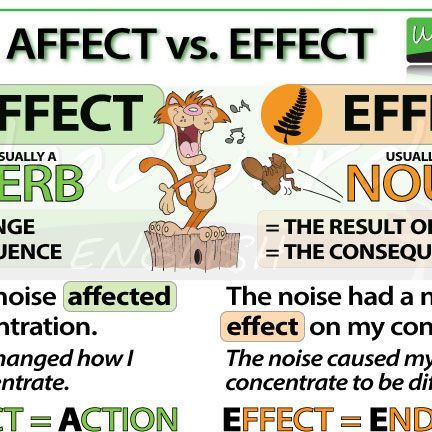
Affect is usually a verb that means to influence or produce a change in someone or something.
When something affects another thing, it has an impact on it.
Examples of Affect:
Lack of sleep can affect your health.
The weather affects our travel plans.
Social media can affect people’s opinions.
Stress may affect your ability to concentrate.
The new rules will affect all employees.
Simple meaning: Affect means to influence or change something.
2. What Does Effect Mean?
Effect is usually a noun that means a result or consequence of an action, event, or situation.
It describes what happens because of something else.
Examples of Effect:
The medicine had a positive effect on my health.
Climate change has serious effects on the environment.
Exercise has a good effect on your body.
The new policy had an unexpected effect on the company.
Lack of sleep can have a negative effect on concentration.
Simple meaning: Effect means the result or outcome of something.
3. Affect vs. Effect: What Is the Difference?
The main difference between affect and effect is their grammatical function.
| Affect | Effect |
|---|---|
| Usually a verb | Usually a noun |
| Means to influence | Means a result |
| Describes an action | Describes an outcome |
| Can affect something | Can have an effect on something |
Compare these sentences:
The cold weather can affect your health.
The cold weather can have a negative effect on your health.
Both sentences communicate a similar idea, but they use different grammatical structures.
4. How to Remember Affect vs. Effect
Here is a simple trick to help you remember the difference.
Affect = Action
Think of affect as an action that influences something.
Example: Smoking can affect your lungs.
Effect = End Result
Think of effect as the final result of an action.
Example: Smoking has harmful effects on your lungs.
Another useful memory trick is:
Affect = Action
Effect = End result
This simple method can help you choose the correct word when writing English sentences.
5. Can Affect Be a Noun?
Yes! Although affect is usually a verb, it can also be used as a noun in psychology.
In psychology, affect refers to someone’s observable emotional expression or experience.
Example:
The patient showed a positive affect during the interview.
However, this usage is less common in everyday English.
6. Can Effect Be a Verb?
Yes! Although effect is usually a noun, it can also be used as a verb meaning to bring about or accomplish something.
Examples:
The government hopes to effect positive changes.
The new manager wants to effect improvements in the workplace.
This usage is more formal and less common than the noun form.
7. Common Mistakes: Affect or Effect?
English learners sometimes confuse these words because they have similar pronunciation.
Here are some common mistakes:
| Incorrect | Correct |
|---|---|
| The news effected my decision. | The news affected my decision. |
| The weather had a bad affect on us. | The weather had a bad effect on us. |
| Exercise has a positive affect on health. | Exercise has a positive effect on health. |
| Stress can effect your sleep. | Stress can affect your sleep. |
Remember: Use affect when you mean influence and effect when you mean result.
8. Affect vs. Effect Exercises with Answers
Test your understanding by choosing the correct word in each sentence.
1. Lack of exercise can _____ your health.
A. effect
B. affect
C. effects
2. The new medicine had a positive _____ on the patient.
A. affect
B. affecting
C. effect
3. Bad weather may _____ our travel plans.
A. affect
B. effect
C. effects
4. The changes had a significant _____ on the company.
A. affect
B. effect
C. affecting
5. Too much stress can _____ your ability to sleep.
A. effect
B. affects
C. affect
6. The new law will _____ thousands of people.
A. affect
B. effect
C. effects
Answer Key:
B — affect
C — effect
A — affect
B — effect
C — affect
A — affect
Conclusion
Understanding the difference between affect and effect is an important step toward improving your English vocabulary and grammar.
Remember that affect is usually a verb meaning to influence, while effect is usually a noun meaning a result.
For more English grammar explanations, vocabulary lessons, and interactive exercises, visit MyEnglishPath.com and continue improving your English every day.