
Subject and object pronouns are essential parts of English grammar. They help us avoid repeating nouns and make our sentences clearer, shorter, and more natural. Learning how to use them correctly is important for beginners and anyone who wants to improve their English communication skills.
Table of Contents
What Are Subject Pronouns?
Subject pronouns replace the person, animal, or thing performing the action in a sentence. They usually appear before the verb.
The seven subject pronouns in English are:
I – I study English every day.
You – You are a good student.
He – He plays football.
She – She likes reading books.
It – It looks beautiful.
We – We live in the United States.
They – They work together.
Rule: Use subject pronouns when the pronoun performs the action.
For example:
Sarah is my friend. She is very kind.
Tom and Jack are brothers. They play tennis.
What Are Object Pronouns?
Object pronouns replace nouns that receive the action of a verb or follow a preposition. They usually come after verbs or prepositions.
The seven object pronouns are:
Me – She called me yesterday.
You – I will help you.
Him – We invited him to dinner.
Her – I saw her at school.
It – Please close it.
Us – The teacher helped us.
Them – I met them yesterday.
Rule: Use object pronouns when someone or something receives the action.
For example:
John loves Mary. John loves her.
My parents visited my brother and me. They visited us.
Subject Pronouns vs. Object Pronouns
Here is a simple comparison to help you understand the difference:
| Subject Pronouns | Object Pronouns |
|---|---|
| I | Me |
| You | You |
| He | Him |
| She | Her |
| It | It |
| We | Us |
| They | Them |
Remember that subject pronouns perform the action, while object pronouns receive the action.
Common Mistakes to Avoid
Many English learners confuse subject and object pronouns. Here are two common mistakes:
Incorrect: Me like English.
Correct: I like English.
Incorrect: She called he.
Correct: She called him.
Always identify who performs the action and who receives it before choosing a pronoun.
Practice: Test Your Knowledge
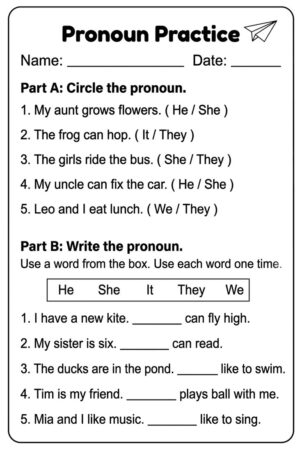
Choose the correct pronoun to complete each sentence.
Sarah is my sister. (She / Her) is a teacher.
My mother loves (I / me).
Tom and John are friends. (They / Them) play football.
The teacher helped (we / us).
I saw Peter yesterday. I saw (he / him).
Answers: 1. She, 2. me, 3. They, 4. us, 5. him.
Improve Your English Grammar with MyEnglishPath
Understanding subject and object pronouns is an important step toward speaking and writing English correctly. Practice regularly, read English sentences, and try using different pronouns in your daily conversations.
Visit MyEnglishPath.com for more English grammar lessons, practical exercises, and learning resources. You can also explore our grammar guides to strengthen your knowledge of English grammar and improve your communication skills.